CALL TODAY: 208-996-0769
Residential Water Softening Solutions
Boise Flow Solutions offers expert water softener installation, maintenance & repair for Kuna, Nampa, Star, Meridian and surrounding Treasure Valley homes.
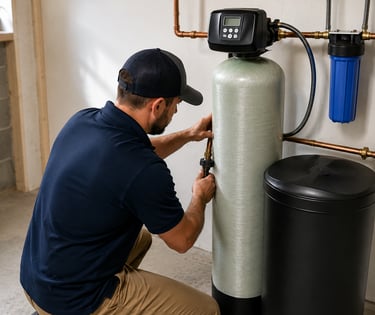
Protect your home, plumbing & appliances with a professionally installed water softener.
If you've noticed white spots on your dishes, chalky buildup on your faucets, dry skin after showering, or appliances that don't seem to last as long as they should, your home is likely experiencing the effects of hard water.
At Boise Flow Solutions, we provide professional water softener installation, replacement, and maintenance throughout Kuna, Eagle, Nampa, Caldwell, Star, Meridian and the surrounding areas. We help homeowners improve their water quality while protecting their biggest investments.
Schedule Water Softener Consultation
The right water-treatment system begins with understanding what is actually in your water.
Boise Flow Solutions provides water-softener consultation and installation services for homeowners in Kuna and surrounding Treasure Valley communities. We can evaluate your home’s water conditions, household demand, plumbing arrangement, available space, and treatment goals before recommending equipment.
Whether you are dealing with mineral buildup, spotted dishes, dry-feeling skin, inefficient appliances, or recurring water-heater scale, we can help you identify an appropriate solution.
Contact Boise Flow Solutions today to schedule a water evaluation and receive a customized recommendation for your home.
How do I know if I need a water softener?
If you notice white spots on dishes, mineral buildup on faucets, soap scum in showers, stiff laundry, dry skin, or reduced hot water performance, you likely have hard water. Many homes throughout Kuna and the Treasure Valley have hard water due to naturally occurring calcium and magnesium in the groundwater.
Will a water softener lower my utility bills?
Yes. Hard water causes mineral scale to build up inside water heaters, making them work harder to heat water. A water softener helps maintain efficiency, which can reduce energy consumption and potentially lower monthly utility costs.
Is hard water bad for my health?
No. Hard water is generally considered safe to drink and is not a health concern for most people. However, it can cause significant damage to plumbing systems, water heaters, appliances, and fixtures over time while making cleaning more difficult.
How long does a water softener last?
A professionally installed and properly maintained water softener typically lasts 10 to 20 years. Routine maintenance, proper sizing, and regular salt replenishment all contribute to maximizing system life.
What size water softener do I need?
The correct size depends on several factors, including:
Number of residence in your home
Daily water consumption/usage
Water hardness level based on evaluation
Plumbing configuration in home
A hardness and usage evaluation, plus home configuration are used to determine system type needed for optimal performance.
Do water softeners remove contaminants from water?
No. A water softener is designed specifically to remove hardness minerals like calcium and magnesium. It does not remove bacteria, viruses, chlorine, heavy metals, or many other contaminants. If your goal is to improve drinking water quality, we often recommend pairing your water softener with a reverse osmosis drinking water system for comprehensive water treatment.
What are the benefits of installing a water softener?
A water softener offers numerous benefits, including: protection of plumbing from scale buildup, extension on the life of appliances, improvement to water heater efficiency, softer/healthier skin and hair, cleaner dishes and glassware, noticeable difference in clean laundry, reduction in soap and detergent usage, less cleaning of fixtures, maintaining of home value, lowering of maintenance costs over time and much more!
How often do I need to add salt?
Typically every 4-8 weeks, however it truly depends on:
Household size
Water consumption/usage
Water hardness settings
System capacity (tank size)
Modern water softeners regenerate based on actual water usage, making them more efficient than older systems.
Frequently asked questions
The Boise Flow Water Softener Guide
Quality soft water for homeowners in Kuna, Nampa, Caldwell, Eagle, Star, Middleton, and Boise.
Understanding Water Hardness
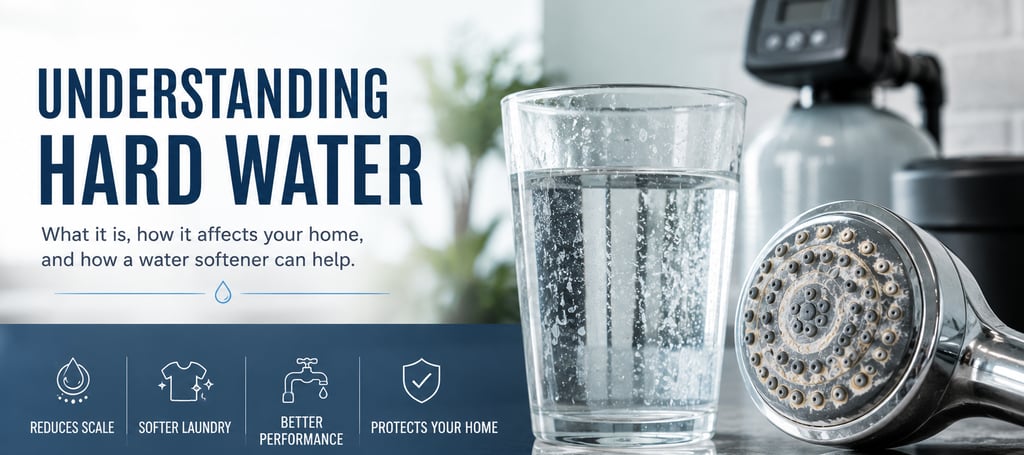
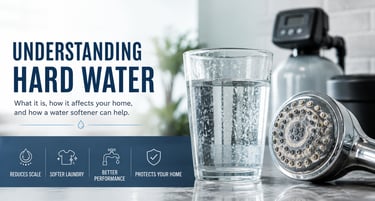
Hard water is one of the most common water-quality concerns for homeowners throughout the Treasure Valley. While municipal water is treated to meet drinking-water standards, that treatment does not necessarily remove the naturally occurring calcium and magnesium responsible for water hardness.
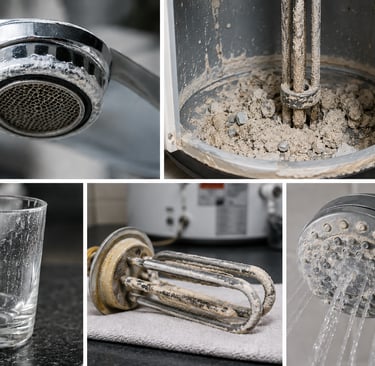
These minerals are generally not considered a health hazard. However, they can create persistent problems throughout your home, including mineral deposits on plumbing fixtures, scale inside water heaters, cloudy glassware, dry-feeling skin, stiff laundry, and reduced appliance efficiency.
At Boise Flow Solutions, we help homeowners evaluate their water and select water-treatment equipment that fits their household, plumbing system, water source, and long-term goals.
What Is Hard Water?
Hard water contains elevated concentrations of dissolved minerals, primarily calcium and magnesium. These minerals enter the water as it moves through underground soil and rock formations.
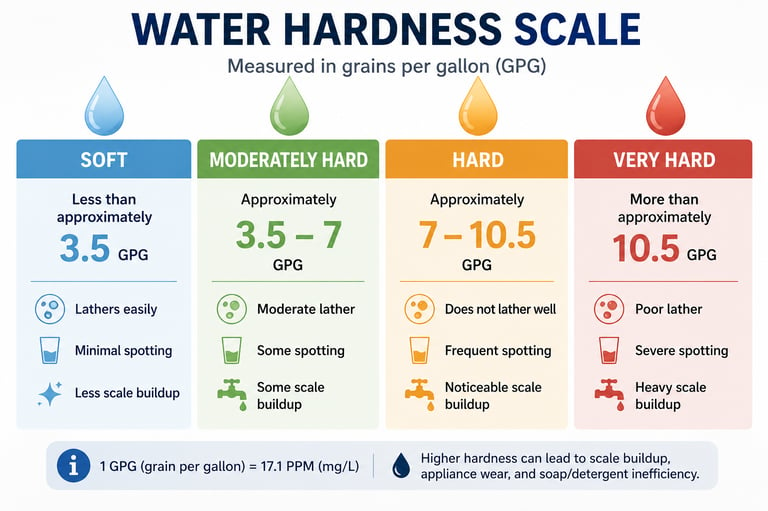
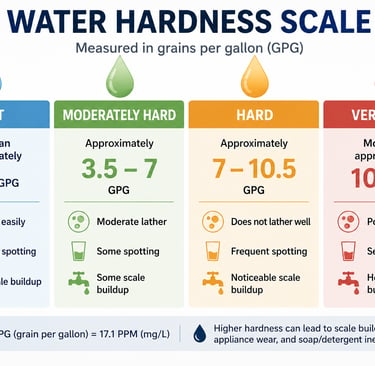
Water hardness is commonly measured in either:
Grains per gallon, abbreviated as GPG
Parts per million, abbreviated as PPM or mg/L
One grain per gallon is approximately equal to 17.1 parts per million.
A commonly used water-hardness scale classifies water as:
Soft: Less than approximately 3.5 GPG
Moderately hard: Approximately 3.5 to 7 GPG
Hard: Approximately 7 to 10.5 GPG
Very hard: More than approximately 10.5 GPG
Many Ada and Canyon County homes fall within the hard or very-hard range, although the exact measurement can vary based on the neighborhood, water provider, groundwater source, seasonal conditions, and whether the property uses municipal water or a private well.
The most reliable way to determine what your home needs is to test the water at the property rather than relying solely on a citywide average.
How Hard Is Treasure Valley Water?
Water hardness varies across Kuna, Boise, Meridian, Nampa, Eagle, Star, Caldwell, and surrounding communities. Even homes located relatively close to one another may receive water from different wells, aquifers, treatment facilities, or municipal systems.
Published regional estimates often place the Treasure Valley water somewhere between approximately 6 and 15 grains per gallon, with some locations or private wells potentially testing outside that range. Water above 7 GPG is generally considered hard, while readings above approximately 10.5 GPG are considered very hard.
That means many local households receive water capable of producing noticeable mineral scale and soap-related issues.
Because hardness can vary, Boise Flow Solutions recommends testing for relevant characteristics such as:
Total hardness
Iron
Manganese
pH
Total dissolved solids
Chlorine or chloramine
Sediment
Nitrates or other well-water concerns, when applicable
A water softener should be selected and programmed using actual water conditions whenever possible.
Common Signs of Hard Water:
Hard water does not always have an unusual taste, odor, or appearance. In many cases, homeowners identify it by the effects it leaves behind, such as:
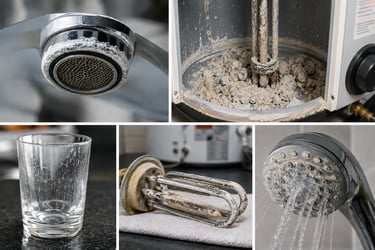
White or Chalky Deposits
Calcium and magnesium can form a crusty white residue around faucets, aerators, showerheads, sinks, and plumbing connections.
Spots on Dishes and Glassware
Minerals can remain on surfaces after water evaporates, leaving spots or a cloudy film on glasses, silverware, shower doors, and dishes.
Soap Scum
Hardness minerals react with soap and can create a stubborn film in bathtubs, showers, sinks, and around drains.
Poor Soap and Shampoo Performance
Hard water can make it more difficult to create a lather. Homeowners may compensate by using additional shampoo, body wash, laundry detergent, or dishwashing products.
Dry-Feeling Skin and Hair
Minerals and soap residue may remain on the skin and hair after bathing. Some people describe their skin as tight, itchy, or dry and their hair as dull or difficult to manage.
Stiff or Dull Laundry
Clothing and linens washed in hard water may feel rough, look faded, or retain detergent and mineral residue.
Reduced Water Flow
Scale can collect inside faucet aerators, showerheads, valves, and certain plumbing components, gradually restricting water flow.
Frequent Appliance Problems
Dishwashers, washing machines, coffee makers, ice makers, humidifiers, water heaters, and other water-using appliances may develop mineral deposits internally.
How Hard Water Can Affect Your Home:
The visible residue on a faucet is only one part of the problem. Mineral accumulation may also occur in areas that are difficult or impossible to see.
Water Heaters
Water heaters are particularly vulnerable because heating water encourages hardness minerals to form scale. Sediment and scale may collect at the bottom of a tank-style water heater or around electric heating elements. In tankless units, minerals may accumulate inside heat exchangers and narrow water passages. This buildup can:
Reduce heating efficiency
Increase recovery time
Create popping or rumbling sounds
Contribute to premature component failure
Increase the need for maintenance and flushing
Shorten the usable life of the equipment
Even a relatively thin layer of scale can interfere with heat transfer, forcing the system to work harder to heat the same amount of water.
Plumbing Fixtures
Hard-water deposits can damage the appearance and operation of:
Faucets
Shower valves
Showerheads
Sink sprayers
Toilet components
Aerators
Decorative plumbing finishes
Minerals may clog small openings, restrict flow, cause valves to stick, or leave permanent staining on certain surfaces.
Pipes and Plumbing Components
Scale can develop along the interior of pipes and fittings. Significant accumulation may gradually reduce the usable diameter of a water line and contribute to lower flow.
Modern plumbing materials may react differently than older galvanized piping, but valves, fittings, heating equipment, and small water passages can still be affected.
Dishwashers and Washing Machines
Hard water can reduce cleaning performance and leave minerals inside pumps, valves, heating elements, and spray components. Homeowners may use more detergent while still receiving poorer results.
Glass, Tile, and Countertops
Water spots and mineral deposits can become increasingly difficult to remove after repeated exposure. Porous materials, grout, textured glass, and certain finishes may require frequent cleaning or specialized products.
What Does a Water Softener Do?
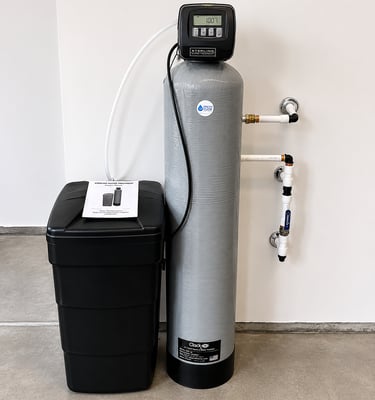
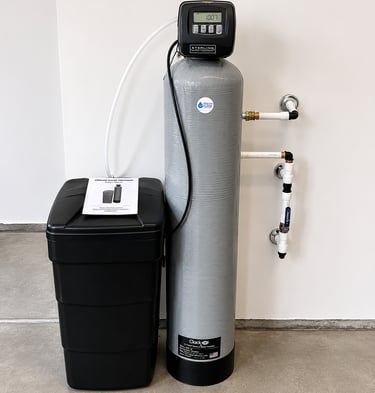
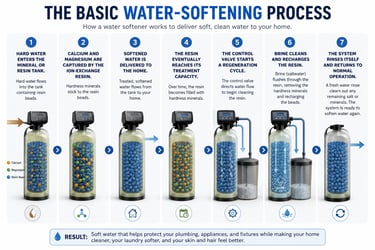
A traditional water softener removes hardness minerals through a process called ion exchange.
Inside the softener is a tank containing resin beads. As hard water moves through this resin, calcium and magnesium attach to the beads. The system exchanges those hardness minerals for a small amount of sodium or potassium.
The treated water then travels through the home with significantly lower hardness.
Once the resin reaches its treatment capacity, the system performs a regeneration cycle. During regeneration, a concentrated brine solution cleans the hardness minerals from the resin and prepares it to treat water again.
A properly designed system completes this process automatically.
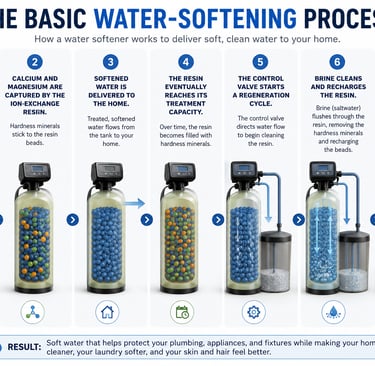
The Basic Water-Softening Process:
Hard water enters the mineral or resin tank.
Calcium and magnesium are captured by the ion-exchange resin.
Softened water is delivered to the home.
The resin eventually reaches its treatment capacity.
The control valve starts a regeneration cycle.
Brine cleans and recharges the resin.
The system rinses itself and returns to normal operation.
Modern demand-initiated systems track actual water usage and regenerate only when necessary. This is generally more efficient than older timer-based equipment that regenerates on a fixed schedule regardless of household consumption.
Benefits of Installing a Water Softener:
Less Scale on Fixtures and Surfaces
Softened water can dramatically reduce new mineral deposits on faucets, sinks, shower doors, tile, and other surfaces.
Existing scale may still need to be removed, but continued buildup should become easier to control.
Better Soap Performance
Soap, shampoo, and detergent typically lather more easily in softened water. Many households find that they can reduce the amount of cleaning and personal-care products they use.
The correct reduction depends on the product and the original hardness level, so detergent quantities should be adjusted gradually after installation.
Cleaner Dishes and Glassware
A softener can reduce mineral spots and cloudy residue on dishes, silverware, and glassware. Dishwasher detergent settings may also need to be lowered after the water is softened.
Softer-Feeling Laundry
Softened water can help detergent rinse more effectively, potentially leaving towels, clothing, and bedding feeling cleaner and less stiff.
Improved Bathing Experience
Many homeowners report that their hair feels easier to manage and their skin feels smoother after switching to softened water.
Softened water may feel slippery at first. This is often because soap is rinsing away more effectively rather than reacting with hardness minerals and leaving residue behind.
Protection for Water-Using Equipment
Reducing scale can help protect:
Water heaters
Dishwashers
Washing machines
Ice makers
Coffee makers
Humidifiers
Plumbing fixtures
Tankless water-heater heat exchangers
A softener cannot prevent every mechanical failure, but it can reduce one of the major sources of mineral-related wear.
Easier Household Cleaning
With less mineral residue and soap scum, homeowners may spend less time scrubbing sinks, faucets, tubs, tile, and shower glass.
Water Softener Versus Water Filter
Water softeners and water filters perform different jobs. A water softener is designed primarily to remove calcium and magnesium. Its purpose is to reduce hardness and scale. A water filtration system may be designed to reduce other substances, such as:
Chlorine
Chloramine
Sediment
Unpleasant tastes or odors
Iron
Manganese
Certain organic compounds
Specific contaminants addressed by the filter’s certification
A standard water softener is not a universal water purifier. Likewise, many filters do not remove hardness.
Some Treasure Valley homes benefit from a combined system that includes both softening and filtration. The correct configuration depends on the water-test results and the homeowner’s objectives.
Salt-Based Softeners Versus Salt-Free Conditioners:
The terms “water softener” and “water conditioner” are sometimes used interchangeably, but these systems may work very differently.
Salt-Based Ion-Exchange Water Softeners:
A salt-based system physically removes calcium and magnesium through ion exchange.
Advantages may include:
Measurably softer water
Strong protection against scale
Better soap and detergent performance
Reduced spotting and soap scum
Effective treatment for moderate, hard, and very-hard water
These systems require:
A drain connection
Electrical power for most control valves
Periodic salt replenishment
Space for a resin tank and brine tank
Occasional maintenance
Salt-Free Water Conditioners:
Salt-free systems generally do not remove calcium and magnesium. Instead, they attempt to alter how the minerals behave so they are less likely to attach to plumbing and equipment.
Potential advantages include:
No softener salt
No traditional regeneration cycle
No brine discharge
Lower routine maintenance in some applications
However, because the minerals usually remain in the water, a salt-free system may not provide the same improvements in soap performance, water spotting, laundry, or bathing feel as a true ion-exchange softener.
Salt-free conditioning may be appropriate for certain households, but it should not automatically be presented as identical to conventional water softening.
How to Choose the Right Water Softener Size?
Water-softener sizing should be based on more than the number of bedrooms in the house.
Important factors include:
Number of occupants
Average daily water use
Measured water hardness
Presence of iron or manganese
Peak household flow rate
Number of bathrooms
Large tubs, multi-head showers, or high-flow fixtures
Irrigation or specialty water use
Desired regeneration frequency
Available installation space
A commonly used planning estimate is approximately 60 to 75 gallons of water per person per day, although actual usage varies considerably.
For example, a four-person household using 70 gallons per person per day would use approximately 280 gallons daily. If the water tests at 12 GPG, the household would generate approximately:
280 gallons × 12 GPG = 3,360 grains of hardness per day
That figure helps determine the system’s appropriate operating capacity and regeneration schedule.
Choosing equipment based only on the advertised maximum grain capacity can be misleading. A system should be sized for efficient salt use, adequate flow, reasonable regeneration intervals, and the actual conditions in the home.
What Size Softener Does a Typical Home Need?
Many homes use systems marketed in ranges such as:
32,000 grains
40,000 grains
48,000 grains
64,000 grains
These labels can be helpful for basic comparison, but they do not tell the entire story. The usable capacity of a system depends on the resin volume, salt dosage, valve programming, household demand, and desired efficiency.
A larger system is not automatically better. Oversized or incorrectly programmed equipment may sit unused for long periods, while an undersized system may regenerate too frequently or allow hard water to pass through during periods of high demand.
Professional sizing provides a better result than selecting equipment by tank label alone.
Where Is a Water Softener Installed?
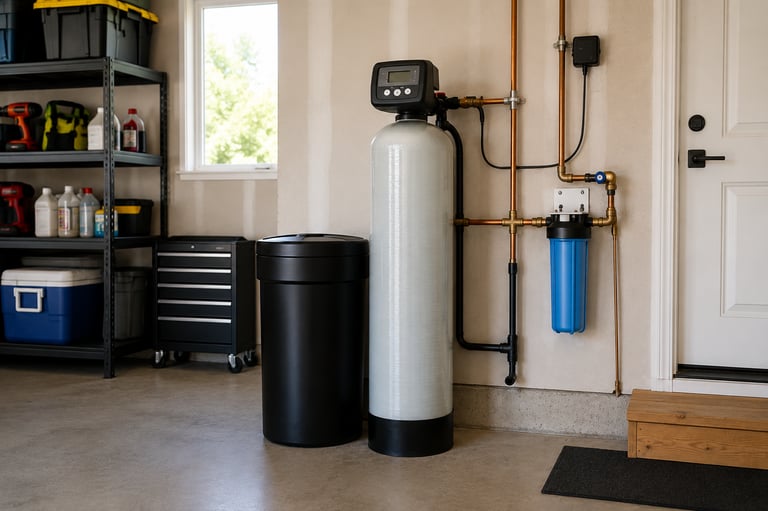
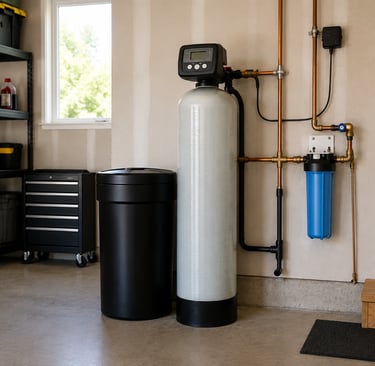
A whole-home softener is normally installed near the point where the main water supply enters the building.
Common installation locations include:
Garages
Mechanical rooms
Basements
Utility rooms
Crawlspaces with adequate access and protection
Exterior enclosures designed for the equipment
The installation generally requires:
Access to the main water line
A nearby drain
A suitable electrical outlet
Adequate floor space
Protection from freezing temperatures
A bypass valve
Access for adding salt and servicing the system
Outdoor equipment must be protected from freezing, extreme heat, moisture, direct sunlight, and physical damage.
Should Every Water Line Be Softened?
Most whole-home systems soften the hot and cold water used inside the house. However, some lines may be intentionally bypassed.
Outdoor irrigation and hose bibs are often left untreated because using softened water on landscaping may waste system capacity and salt.
Some homeowners also choose to leave a dedicated cold-water line at the kitchen sink untreated for drinking and cooking. Others prefer softened water throughout the home and install a reverse-osmosis system at the kitchen sink.
The ideal plumbing arrangement depends on the household’s preferences and the existing layout.
Is Softened Water Safe to Drink?
For most people, properly softened water is considered suitable for normal household use. Ion exchange adds a small amount of sodium to the water based on how much hardness is removed.
The sodium added by a softener is not the same as putting table salt directly into drinking water. However, people following a medically prescribed sodium restriction should discuss their drinking-water arrangement with a qualified healthcare professional.
Common alternatives include:
Bypassing a drinking-water faucet
Using potassium chloride instead of sodium chloride, when compatible
Installing a reverse-osmosis drinking-water system
Keeping a dedicated unsoftened cold-water line
Water used for outdoor plants may also be left unsoftened.
How Much Salt Does a Water Softener Use?
Salt consumption depends on:
Water hardness
Household water use
Resin volume
System capacity
Control-valve programming
Regeneration frequency
Salt-efficiency settings
Iron content
A correctly sized, demand-initiated softener should use considerably less salt than an inefficient system that regenerates on a fixed schedule.
Homeowners should periodically check the brine tank and maintain the salt level recommended for their equipment. Filling the tank completely to the top is not always necessary and may make salt bridging more difficult to identify.
What Is a Salt Bridge?
A salt bridge is a hardened layer that forms inside the brine tank. The tank may appear full, but an empty space underneath the hardened salt prevents proper brine formation.
Possible signs include:
The salt level never appears to decrease
Hard-water symptoms return
The unit regenerates but does not soften the water
A hollow space is found beneath the salt crust
A salt bridge can sometimes be carefully broken apart, but recurring problems may indicate excess humidity, unsuitable salt, overfilling, or another equipment issue.
How Often Does a Water Softener Regenerate?
A modern system may regenerate every few days or after a certain volume of water has been treated. The timing depends on the hardness level, household consumption, and programmed capacity.
Regeneration is often scheduled overnight when water use is low. During the cycle, some systems may not provide softened water, while twin-tank systems can alternate between tanks and provide continuous treatment.
A system that regenerates every night may be undersized or improperly programmed. A system that rarely regenerates may be oversized, incorrectly configured, or not recording water use correctly.
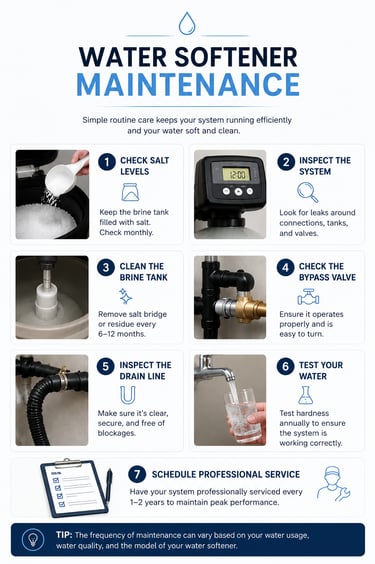
Does a Water Softener Require Maintenance?
Water softeners are relatively low-maintenance, but they are not maintenance-free.
Routine care may include:
Adding the correct type of salt
Checking for salt bridging or mushing
Cleaning the brine tank when needed
Inspecting the drain line
Confirming the bypass valve position
Testing the treated water
Updating programming after household changes
Cleaning injectors or screens
Servicing or replacing resin when necessary
Checking for leaks
Maintenance requirements vary by equipment, water conditions, and usage.
How Long Does a Water Softener Last?
A quality system may provide many years of service when it is properly sized, installed, programmed, and maintained.
Its lifespan can be affected by:
Chlorine exposure
Iron or sediment
Resin quality
Water pressure
Regeneration frequency
Installation quality
Control-valve design
Maintenance history
Daily water consumption
Resin, seals, spacers, injectors, motors, and control valves may require service at different points during the life of the equipment.
Can a Water Softener Remove Iron?
Some ion-exchange softeners can remove limited amounts of clear-water, dissolved iron. However, iron treatment should not be assumed without testing.
Higher concentrations of iron, oxidized iron, iron bacteria, manganese, sulfur odors, or sediment may require specialized filtration before the softener.
Installing a standard softener without identifying these conditions can lead to resin fouling, staining, odors, and poor system performance.
What Happens if the Water Softener Is Set Incorrectly?
Programming the softener below the home’s actual hardness may allow hard water to pass through before regeneration.
Programming it excessively high can cause the system to regenerate more often than necessary, wasting salt and water.
The correct hardness setting should reflect:
The measured hardness
Compensation for certain iron levels
The equipment manufacturer’s specifications
Household water consumption
Desired reserve capacity
A water test and proper startup programming are important parts of a professional installation.
Can You Install a Water Softener Yourself?
Some homeowners attempt do-it-yourself installation, but a whole-home softener requires more than connecting two water lines.
A proper installation should address:
Pipe sizing
Flow direction
Water pressure
Drain requirements
Air-gap protection
Bypass configuration
Electrical requirements
Freeze protection
Local plumbing requirements
Equipment programming
Startup and leak testing
Incorrect installation can create leaks, drainage problems, reduced water pressure, cross-connections, equipment damage, or unreliable treatment.
Professional installation also helps ensure the equipment is sized and configured for the property rather than simply connected to the plumbing.
Is a Water Softener Worth It in the Treasure Valley?
For many Treasure Valley households, a water softener is a practical home-protection investment rather than merely a convenience.
The value may include:
Reduced scale accumulation
Better protection for water heaters and appliances
Cleaner plumbing fixtures
Less soap scum
Improved dishwasher results
Lower detergent and cleaning-product use
Softer-feeling laundry
A more comfortable bathing experience
Less time spent removing mineral deposits
The financial return varies from home to home. However, preventing scale-related wear and reducing routine cleaning can provide meaningful long-term value in areas with consistently hard water.
Copyright © 2026 Boise Flow Solutions LLC, dba Boise Flow. All rights reserved.
Boise Flow Solutions


Website designed & powered by the BHEMOTH GROUP