LIMITED-TIME OFFER: SAVE UP TO $250 ON WHOLE-HOME WATER SOFTENERS
Residential Reverse Osmosis Systems
Experts in Reverse Osmosis installation in Kuna, Nampa, Caldwell, Eagle, Star and surrounding areas
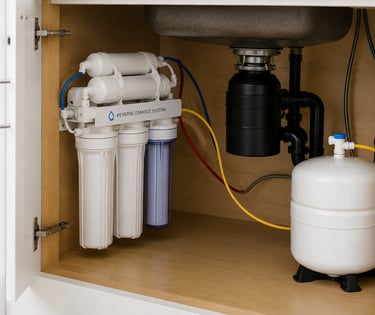
The water supplied to homes throughout Kuna and the Treasure Valley is treated before it reaches the tap. However, treated water can still contain dissolved minerals, metals, salts, treatment byproducts and other substances that affect its taste, odor or overall quality.
A professionally installed reverse osmosis system gives your household an additional layer of water treatment right where you need it most. Boise Flow Solutions installs and services reverse osmosis drinking-water systems for homeowners throughout the Treasure Valley.
Whether you are concerned about the taste of your tap water, tired of purchasing bottled water or simply want greater confidence in the water your family drinks, we can help you find the right solution for your home.
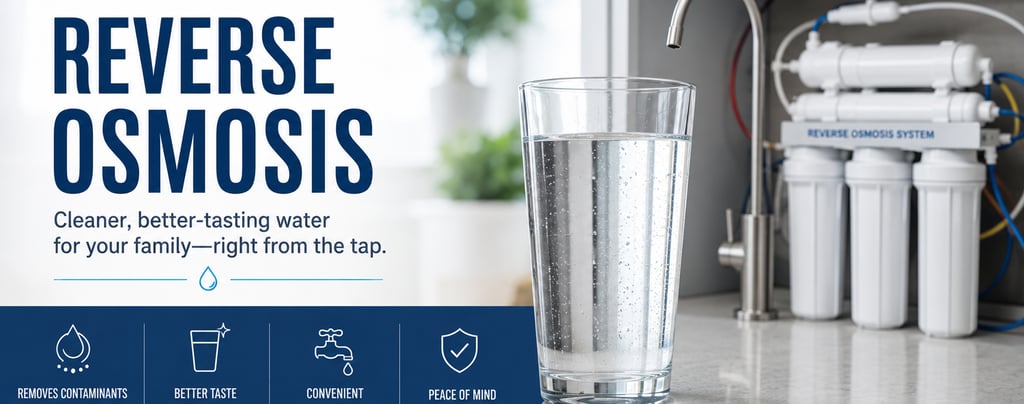
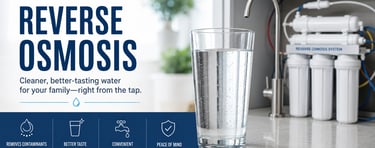
Request a Reverse Osmosis Consultation
The best reverse osmosis system starts with understanding your home's water quality and your family's specific needs.
Boise Flow Solutions provides reverse osmosis consultation and installation services for homeowners in Kuna and throughout the Treasure Valley. Our team evaluates your water quality, household water usage, plumbing configuration, available installation space, and water treatment goals to recommend the right reverse osmosis system for your home.
Whether you're concerned about the taste or odor of your drinking water, looking to reduce dissolved contaminants, tired of buying bottled water, or simply want cleaner, better-tasting water directly from the tap, we're here to help you find the ideal solution.
Contact Boise Flow Solutions today to schedule a water evaluation and receive a customized reverse osmosis recommendation designed specifically for your home.
Does reverse osmosis remove everything from water?
No treatment system removes every possible substance. RO systems can significantly reduce many dissolved contaminants, but performance varies by model, membrane, water conditions and system maintenance. Review the manufacturer’s certified reduction claims when selecting equipment.
Will reverse osmosis soften my entire home’s water?
No. A typical RO system provides treated water at one or more drinking-water fixtures. A water softener is designed to address hardness minerals throughout the home.
Can an RO system connect to my refrigerator?
In many homes, yes. The system may be connected to a compatible refrigerator dispenser or ice maker. Distance, tubing size, water pressure and refrigerator specifications must be considered.
How frequently should the filters be replaced?
Many sediment and carbon filters require replacement every six to twelve months. The correct interval depends on your system, water quality and household usage.
Why does an RO system need a storage tank?
The membrane treats water gradually. The tank stores treated water so it is available at a practical flow rate when you open the faucet.
Can reverse osmosis improve the taste of well water?
It may, depending on what is causing the taste problem. Well water should be tested so the treatment system can be designed around the substances actually present.
How long does an RO membrane last?
RO membranes commonly last longer than prefilters, but their lifespan varies. Water hardness, chlorine exposure, usage, pressure and maintenance all affect membrane life.
Does reverse osmosis remove beneficial minerals?
RO treatment reduces many dissolved substances, including some naturally occurring minerals. Optional remineralization cartridges are available for homeowners who prefer minerals to be added back after treatment.
Frequently asked questions
The Boise Flow Reverse Osmosis Guide
Clean, quality water for homeowners in Kuna, Nampa, Caldwell, Eagle, Star, Middleton, and Boise.
Understanding Reverse Osmosis
Reverse osmosis, commonly called RO, is a water-treatment process that uses pressure to move water through a specialized semipermeable membrane. The membrane allows water molecules to pass through while reducing many dissolved substances that may be present in the incoming water.
Most residential reverse osmosis systems use several treatment stages rather than relying on the RO membrane alone. A typical system may include:
A sediment prefilter
One or more carbon filters
A reverse osmosis membrane
A treated-water storage tank
A final polishing filter
A dedicated drinking-water faucet
Working together, these components produce cleaner, better-tasting water for drinking, cooking and preparing beverages.
How Does a Reverse Osmosis System Work?
A residential RO system generally treats water through the following process:
1. Sediment Pre-filtration
Incoming water first passes through a sediment filter. This stage captures particles such as dirt, rust, sand and other suspended material that could affect the system or shorten the life of the membrane.
2. Carbon Filtration
The water then moves through an activated-carbon filter. Carbon filtration can help reduce chlorine, unpleasant tastes, odors and certain organic compounds. Removing chlorine also helps protect many types of RO membranes.
3. Reverse Osmosis Membrane
Water pressure pushes the prefiltered water against the semipermeable membrane. Water that passes through the membrane becomes the treated product water, while concentrated dissolved substances are carried away through a separate drain line.
4. Treated-Water Storage
Because reverse osmosis treatment occurs gradually, purified water is typically collected in a small storage tank. This gives your household convenient access to treated water when the faucet is opened.
5. Final Polishing
Before reaching the dedicated faucet, the water commonly passes through a final carbon filter. This finishing stage helps improve the water’s taste and freshness.
What Can Reverse Osmosis Reduce?
The performance of an RO system depends on the equipment, membrane, filter configuration, incoming water quality, water pressure and maintenance schedule. Depending on the system selected, reverse osmosis may help reduce substances such as:
Lead
Arsenic
Chromium
Copper
Chloride
Fluoride
Nitrates and nitrites
Dissolved salts
Total dissolved solids
Certain chemicals and treatment byproducts
Unpleasant tastes and odors
Not every reverse osmosis system is certified to reduce every contaminant. Boise Flow Solutions can evaluate your water-quality concerns and recommend equipment designed for your specific goals.
For health-related concerns or private-well water, professional laboratory testing may be recommended before selecting a treatment system.
Benefits of Installing a Reverse Osmosis System
Better Tasting Drinking Water
Dissolved minerals, disinfectants and other substances can change how tap water tastes or smells. An RO system can produce water that tastes cleaner and more refreshing.
Greater Confidence in Your Water
Reverse osmosis adds another treatment barrier between the incoming water supply and the water your household uses for drinking and cooking.
Convenient Water at Home
Treated water is available directly from a dedicated faucet, eliminating the inconvenience of storing and transporting cases or large containers of bottled water.
Less Dependence on Bottled Water
A home RO system can reduce the number of single-use water bottles your household purchases, stores and discards.
Improved Coffee, Tea and Cooking
Water quality can affect the flavor of coffee, tea, ice, soups, sauces and other foods. Cleaner-tasting water allows the natural flavor of your food and beverages to stand out.
Cleaner-Looking Ice
When connected to a compatible refrigerator or ice maker, treated RO water may produce ice with improved taste, odor and appearance.
Protection for Certain Small Appliances
Reducing dissolved solids may help limit mineral residue in appliances that use drinking water, such as coffee makers, tea kettles, countertop ice machines and humidifiers.
Reverse Osmosis vs. Water Filtration
Reverse osmosis and conventional filtration are related, but they do not accomplish exactly the same thing.
Standard sediment filters primarily capture suspended particles. Carbon filters are commonly used to address chlorine, tastes and odors. Reverse osmosis goes further by using a membrane to reduce many dissolved substances that ordinary mechanical filtration may not remove.
Many RO systems combine all three technologies:
Sediment filtration for particles
Carbon filtration for chlorine, taste and odor
Membrane treatment for dissolved contaminants
The right system depends on what is present in your water and what you would like to improve.
Reverse Osmosis vs. a Water Softener
Reverse osmosis systems and water softeners solve different water-quality problems.
A water softener treats hardness minerals such as calcium and magnesium throughout the home. This can help reduce scale accumulation, soap residue, spotted dishes and mineral buildup in plumbing fixtures and water-using appliances.
A reverse osmosis system is generally installed at a specific point of use and produces treated water for drinking and cooking. It is designed to reduce many dissolved substances rather than primarily addressing whole-home hardness.
Homes with hard water may benefit from using both systems:
The water softener treats hard water throughout the house.
The reverse osmosis system provides highly filtered drinking water at the kitchen sink.
Installing a softener ahead of an RO system may also help protect the membrane from excessive mineral accumulation in homes with especially hard water.
Where Is a Reverse Osmosis System Installed?
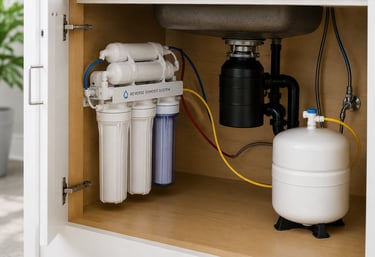
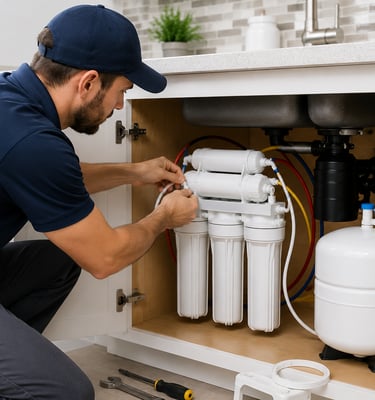
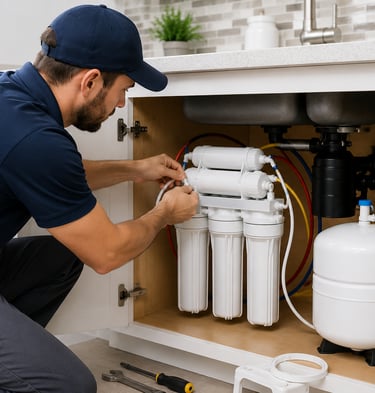
Most residential reverse osmosis systems are installed beneath the kitchen sink. The equipment remains out of sight while supplying treated water to a dedicated faucet mounted near the main kitchen faucet.
Depending on the home and system design, components may also be installed in a pantry, utility room, basement, garage or another accessible location.
A system may be configured to serve:
A dedicated kitchen faucet
A refrigerator water dispenser
An automatic ice maker
A wet bar or beverage station
Multiple nearby drinking-water fixtures
Our technicians will review the available space, plumbing connections, water pressure and intended use before recommending an installation layout.
Is Reverse Osmosis Water Safe to Drink?
A properly selected and maintained residential reverse osmosis system can provide excellent water for everyday drinking and cooking.
Because RO treatment reduces many dissolved minerals along with unwanted substances, some homeowners ask whether minerals need to be added back into the water. Most people receive the majority of their essential minerals through food rather than drinking water.
For customers who prefer a different flavor profile or mineral content, a remineralization or alkaline finishing cartridge may be available. These cartridges add selected minerals to the water after the reverse osmosis process.
Does Reverse Osmosis Waste Water?
Reverse osmosis systems produce a concentrated reject-water stream while separating dissolved substances from the treated water. The amount of reject water varies significantly based on the system design, membrane condition, incoming pressure, water temperature and storage-tank operation.
Modern high-efficiency systems can produce more treated water while sending less water to the drain than many older designs. A booster pump or permeate pump may also improve performance when household water pressure is limited.
Boise Flow Solutions can help you compare system efficiency, capacity and operating requirements before installation.
Signs You May Benefit from Reverse Osmosis
A reverse osmosis system may be worth considering when:
Your tap water has an unpleasant taste or odor.
You regularly purchase bottled drinking water.
You notice residue in kettles, coffee makers or ice machines.
Your refrigerator filter does not provide the water quality you want.
You are concerned about dissolved substances in your water.
You want a dedicated source of treated water for cooking and beverages.
Your household uses private-well water.
You want cleaner-tasting water without relying on bottled-water delivery.
Water-quality problems can have more than one cause, so an evaluation is the best way to determine whether reverse osmosis, carbon filtration, sediment filtration, water softening or a combination of systems is appropriate.
Professional Reverse Osmosis Installation
Proper installation is important for system performance, reliability and sanitation. A reverse osmosis installation may require connections to the cold-water supply, drain line, storage tank, dedicated faucet and refrigerator.
Our installation process includes:
Reviewing your water concerns and household needs
Inspecting available installation space
Evaluating plumbing connections and water pressure
Recommending an appropriately sized system
Installing the filters, membrane, tank, faucet and tubing
Flushing and testing the system
Checking all connections for leaks
Explaining filter replacement and maintenance requirements
Professional installation helps ensure the system is connected correctly and positioned for convenient future service.
Reverse Osmosis Maintenance
RO systems require routine maintenance to continue producing quality water. Filters collect contaminants over time, and the membrane’s performance may gradually decline.
Maintenance may include:
Replacing sediment prefilters
Replacing carbon prefilters and postfilters
Inspecting the membrane
Sanitizing the system and storage tank
Checking tubing and fittings
Testing water pressure
Checking the storage tank’s air charge
Inspecting the faucet and drain connection
Measuring treated-water quality
Replacing worn or damaged components
Prefilters and postfilters are commonly replaced approximately every six to twelve months, although actual intervals depend on water usage, incoming water quality and the equipment manufacturer.
RO membranes often last longer than standard filters, but they eventually require replacement. Following the manufacturer’s service schedule helps protect system performance and water quality.
Reverse Osmosis System Repair
Contact Boise Flow Solutions when your system develops symptoms such as:
Reduced flow from the RO faucet
A storage tank that no longer fills
Unusual tastes or odors
Constant water running to the drain
Leaking filter housings or tubing
Cloudy or discolored water
Excessive noise during operation
A sudden change in measured water quality
Filters that require unusually frequent replacement
Some problems are caused by clogged filters, low water pressure, an improperly charged storage tank, a restricted membrane or a failed automatic shutoff valve. Our technicians can diagnose the problem and recommend repair, maintenance or replacement.
Choosing the Right Reverse Osmosis System
Not every household needs the same equipment. Important considerations include:
The quality of the incoming water
The contaminants you want to reduce
Household drinking-water usage
Available water pressure
Desired production capacity
Available installation space
Refrigerator or ice-maker connections
Filter and membrane replacement costs
Water-efficiency ratings
Third-party certifications
Optional remineralization or ultraviolet treatment
We focus on selecting a system that matches your water conditions and actual household needs rather than recommending unnecessary equipment.
Copyright © 2026 Boise Flow Solutions LLC, dba Boise Flow. All rights reserved.
Boise Flow Solutions


Website designed & powered by the BHEMOTH GROUP